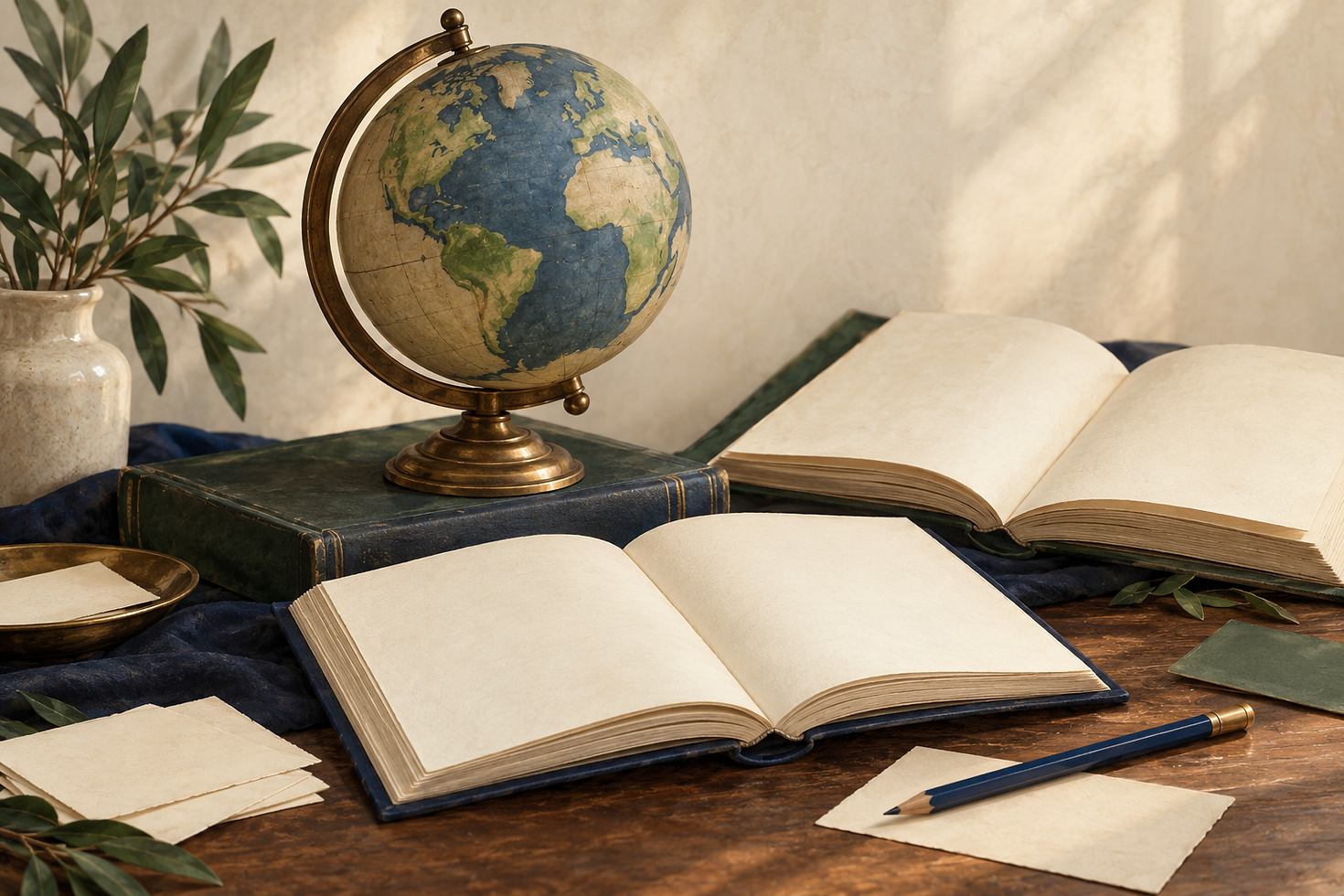
Why Learn the Capitals of Countries When You Can Google Them?

“You can look it up” is a reasonable response to many questions. It becomes less satisfying when it is used to end a conversation about what children should learn.
Knowing a capital city will not, on its own, make someone understand a country. But the possibility of looking up a fact does not make learning it pointless.
A map of knowledge within the learner
Geographical knowledge can give a reader points of orientation. A place mentioned in a book or a news report becomes easier to discuss when the learner has some idea where it is and how it relates to other places.
This is our educational argument for geographical foundations. It is not a claim that memorising every capital automatically improves general intelligence or critical thinking.
The worthwhile question is what a selected fact will help a learner notice next.
Combine a name with a relationship
Choose a small group of countries. Locate them on a map, identify their capitals, and discuss a few relationships: nearby countries, coastlines, languages, or a historical connection.
Return to the map without labels and invite the child to reconstruct what they remember. Check together and correct errors. Classroom research on retrieval practice supports giving learners opportunities to recall taught information.
Then ask a question that goes beyond the list: Why might people travel between these places? What would we need to learn before answering a question about their economies?
Memory provides some starting points. Inquiry develops them.
Teach thoughtful searching too
There will always be more to know than a learner can remember. Searching is a useful skill: framing a question, finding an appropriate source, checking whether the information is current, and understanding the answer.
Some geographical facts require particular care. Countries may have different administrative arrangements, and political descriptions can be contested. Adults should choose reliable references and explain relevant distinctions rather than forcing complexity into an inaccurate flashcard.
Keep the purpose visible
Learning capitals should not become a competition over who can recite the longest list. Choose facts that connect to the child's reading, interests, or curriculum.
A child interested in a story set elsewhere might study its location. A family planning travel might explore the destination together. A news discussion might prompt a careful map-based inquiry.
We can enjoy the convenience of a search engine while still valuing the knowledge we carry into the search. Education should help children build both.
Continue learning with Newton
For younger learners, begin with their communities and build connections to the wider world. Explore Grade 1 Social Studies


Comments